
No products in the cart.
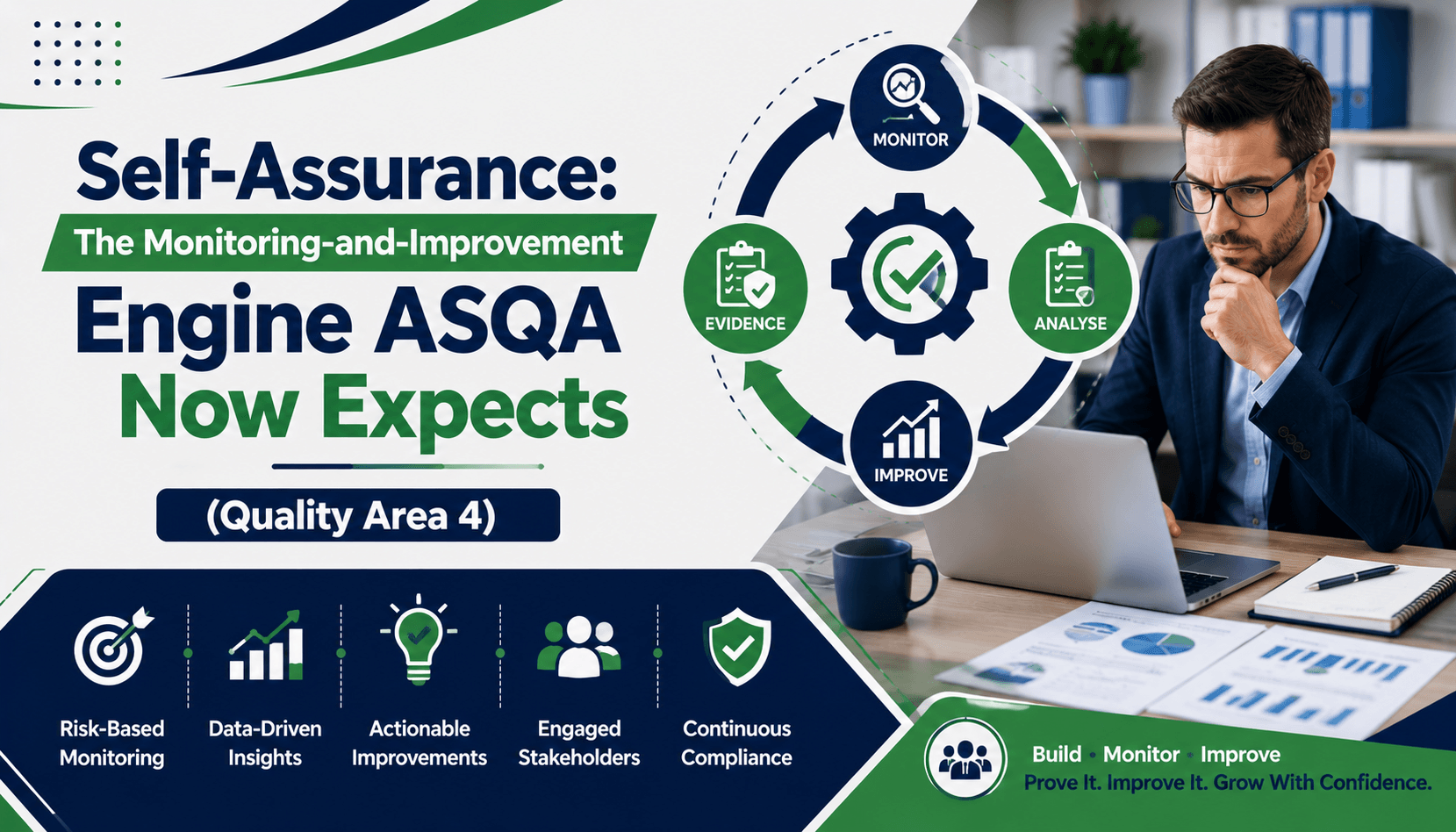
Self-Assurance: The Monitoring-and-Improvement Engine ASQA Now Expects (Quality Area 4)
Quality Area 4 · Monitoring & Improvement ◆ Who owns this: CEO, Compliance Manager & the whole organisation The short version: self-assurance is the engine the 2025 Standards are built around. Quality Area 4 expects you to systematically monitor your own performance, evaluate it honestly, and improve — and crucially, to evidence that loop running. […]
Risk Management ASQA Can See Working
Quality Area 4 · Governance ◆ Who owns this: CEO, Board & the Compliance Manager The short version: Standard 4.2 expects an RTO to identify, assess and manage risks to quality and compliance — and to show the process actually operates. A risk register that exists but never moves is one of the easiest findings for […]
Roles and Responsibilities: Why Standard 4.2 Is About Clarity, Not Just Org Charts
Quality Area 4 · Governance ◆ Who owns this: CEO, Board & the Compliance Manager The short version: Standard 4.2 requires that the roles and responsibilities of RTO staff and third parties are clearly defined and understood. It sounds administrative, but it is a genuine governance control — unclear accountability is how compliance tasks fall […]
Personal Accountability: What the 2025 Standards Now Put on the CEO and Board
Quality Area 4 · Governance ◆ Who owns this: CEO / Board / Governing Persons The short version: the 2025 Standards put accountability for integrity and a culture of compliance squarely on an RTO’s governing persons. It is no longer enough for compliance to live with a compliance manager. The CEO and board must be able […]
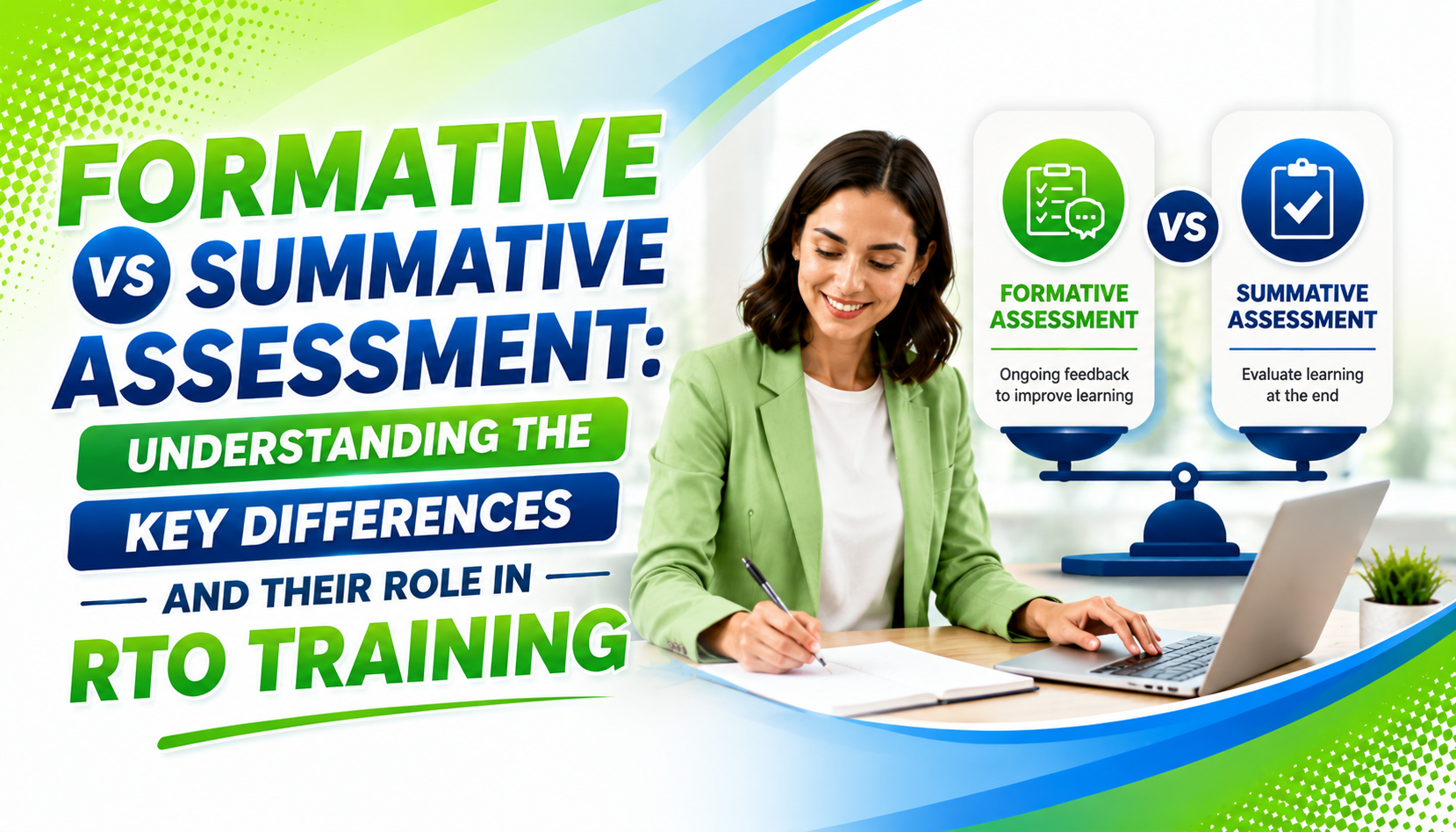
Formative vs Summative Assessment: Understanding the Key Differences and Their Role in RTO Training
Introduction For every successful RTO, a strong assessment strategy is fundamental to compliance and learner outcomes. Understanding formative vs summative assessment is essential for designing learner-focused training and content that meets competency standards and improves completion rates. Under the Standards for RTOs 2015 (Clause 1.8), assessment must be valid, reliable, flexible, and fair — and […]

Integrating RTO Policies and Procedures with Adult Learning Principles for Effective Training Delivery
Boost learner outcomes by aligning RTO policies and procedures with adult learning principles. Introduction Integrating RTO policies and procedures with adult learning principles is key to achieving effective vocational training under ASQA Standards for RTOs 2025. This integration ensures that training delivery enhances learner engagement, boosts completion rates, and improves the likelihood of getting hired […]

Everything You Need to Know About Construction Courses Before Enrolling on 2026 in Australia
Introduction Australia’s construction workforce demand for skilled workers in the industry has remained structurally high through 2026, due to housing delivery pressures, major infrastructure pipelines, and a persistent skills shortage in many trade and professional roles.Jobs and Skills Australia’s 2024 Occupation Shortage List (OSL) shows that skill-level roles typically associated with VET remain in demand.Notably, […]

A Step-by-Step Guide to Creating a Compliant Session Plan
A session plan is a blueprint for what will happen in a training session — what learners will do, what you’ll do, what resources you’ll use, and how you’ll measure progress. A session plan is a step-by-step breakdown of activities in a training session, detailed enough that any trainer can use it. Session plans play […]

What Are the Different Types of RTOs in Australia? Complete Guide to Registered Training Organisations
Australia’s Vocational Education and Training (VET) sector plays a major role in preparing students for real-world careers. At the centre of this system are Registered Training Organisations (RTOs), which deliver nationally recognised qualifications and industry-relevant skills across various sectors.If you are planning to study a vocational course, become an international student, upskill for employment, or […]
Common ASQA Non-Compliance Findings and How to Avoid Them
For RTO managers and compliance officers, the clearest public pattern in recent ASQA Non-Compliance Findings is not obscure paperwork; it is recurring weakness in training design, assessment quality, and trainer/assessor capability.In ASQA’s 2023–24 and 2024–25 Annual Reports, the most commonly assessed standards and the most common areas of non-compliance centred on training and assessment strategies […]