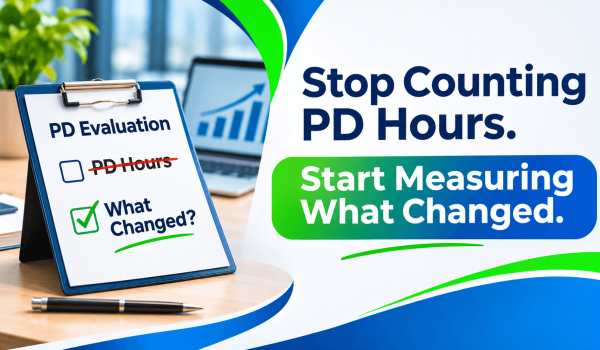
preload-image

Contextualising RTO Resources Without Compliance Drift

If you run compliance, training and assessment, or delivery at an RTO, you already know the theory of contextualisation. It’s in your induction pack, your TAS template, your PD sessions. What rarely gets covered is what it actually looks like from your side of the desk: a trainer emailing you at 4:45pm asking if they can “just tweak” a case study before tomorrow’s class, a compliance manager trying to reconstruct who edited a resource eighteen months ago, an RTO manager staring down an audit notice wondering whether last year’s “quick fixes” are going to hold up.

This is written from that side of the desk. Not another definition of contextualisation a practical look at where your team’s day-to-day customisation habits quietly turn into compliance drift, and how to keep contextualising RTO resources without that risk building up in the background.

What Your RTO Is Actually Allowed to Change

Every RTO staff member touching a resource needs the same mental model, or you get inconsistency across campuses and trainers. The short version:

You’re free to adapt:

  • Terminology, tools, and equipment references so they match your learners’ actual workplace
  • Case studies, scenarios, and simulated tasks so they suit the industry sector you’re delivering to
  • Delivery structure for classroom, online, workplace, or blended modes
  • Examples used to demonstrate foundation skills and knowledge evidence

You can’t touch, regardless of how reasonable the change feels in the moment:

  • Elements and performance criteria
  • Knowledge evidence and performance evidence requirements
  • Assessment conditions endorsed on Training.gov.au

Most RTOs already know this in principle. The problem isn’t the policy. It’s that this line gets blurry fast when a trainer is under time pressure, working from a resource that’s already been edited twice before, with no record of what changed.

Three Moments Where RTOs Actually Lose the Trail

The trainer who contextualises verbally, not on paper.

Your trainer adjusts a scenario on the spot to suit the class in front of them. That's reasonable, responsive delivery. But if that change never makes it back into the resource or a contextualisation log, your RTO has no record it happened, which means you can't demonstrate it during validation. From the outside, it looks like nothing was contextualised at all.
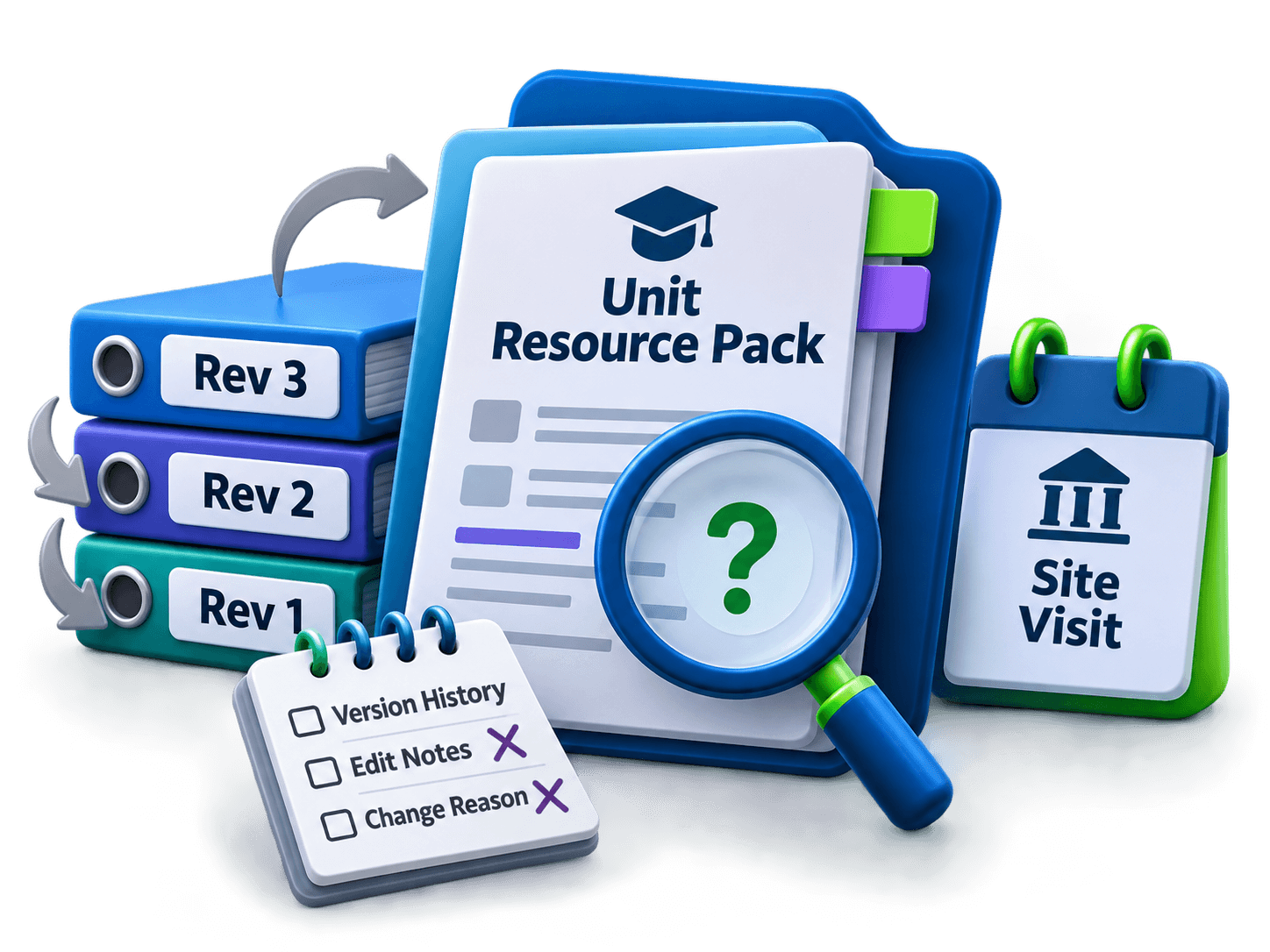
The compliance manager inherits someone else's edits.

You take over a unit's resource pack and it's already been through three rounds of changes by people who've since left. No version history, no notes on why a scenario was swapped or a task simplified. You're now responsible for a resource you didn't build and can't fully audit yourself. That's a genuinely uncomfortable position heading into a site visit.
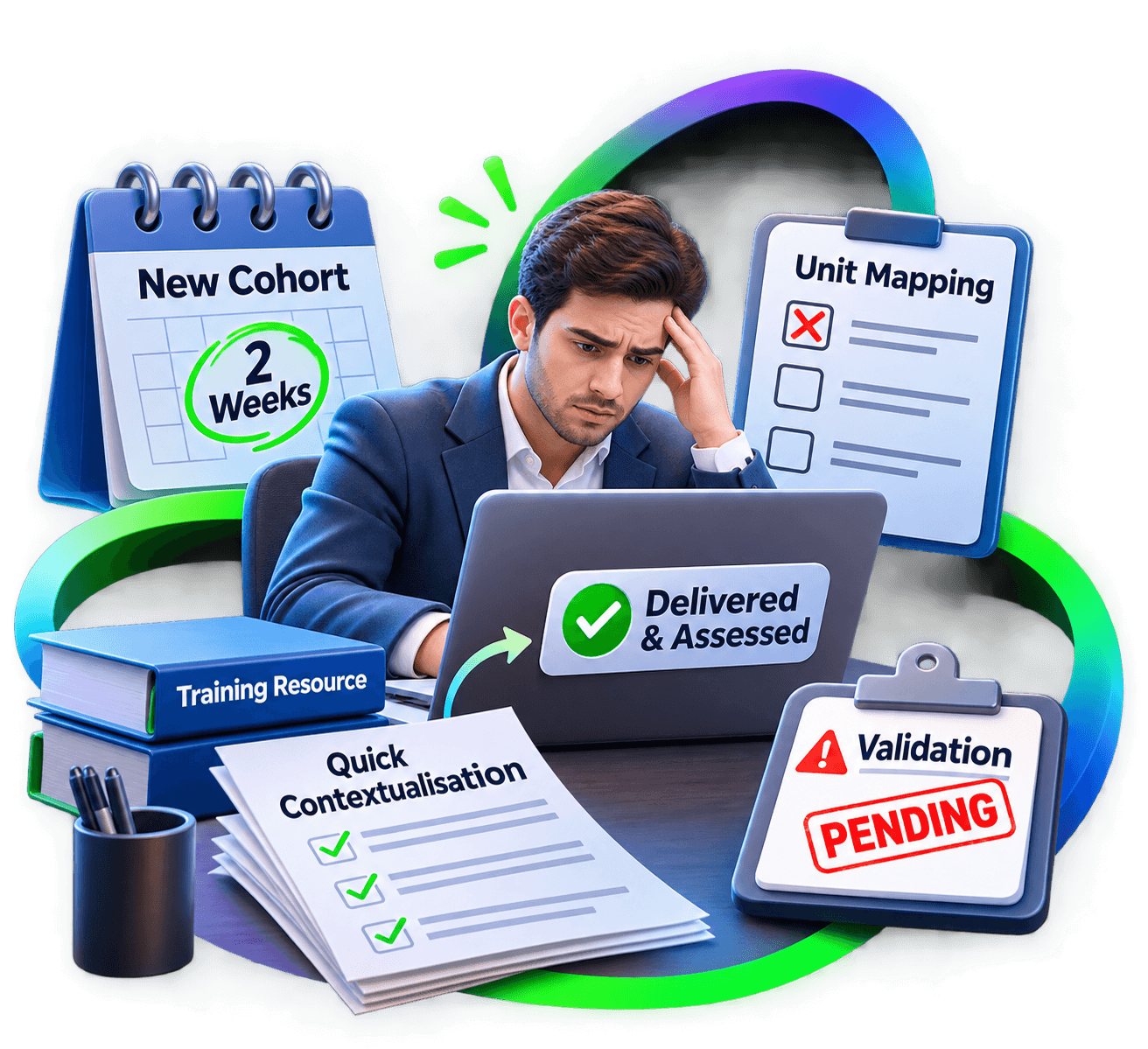
The RTO manager under enrolment pressure.

A new cohort starts in a fortnight and the existing resource doesn't quite fit their industry. Someone contextualises quickly to hit the start date, without time to check the changes against the unit mapping. It gets delivered. It gets assessed. Nobody circles back to formally validate it until something else flags a concern.


None of this is anyone being careless on purpose. It’s what happens when contextualising RTO resources is treated as something individual trainers handle in the moment, rather than a tracked, RTO-wide process.

Why Editable Assessment Resources Compliance Comes Down to Format

Editable resources give RTOs a practical starting point for contextualisation, but they do not remove the RTO’s responsibility to review and validate the resource before use. ASQA’s guidance makes clear that even purchased or pre-validated resources need to be reviewed to ensure they are fit-for-purpose for the RTO’s training environment, learner cohort and specific training product.

Here’s the part that often gets missed at the point of purchase: your RTO’s ability to stay inside the lines depends heavily on what format the resource arrives in before your team touches it.

If your trainers are working from locked PDFs or non-editable SCORM packages, you haven’t prevented compliance drift. You’ve just pushed your own staff toward workarounds. Printed handouts with pen amendments. Screenshots dropped into a new document. Verbal adjustments that never make it into the paper trail. That’s a resourcing problem your RTO is carrying, disguised as a training issue.

Genuinely editable assessment resources, supplied with the unit mapping visible and structured for in-house editing, let your team:

  • See exactly which sections map to which elements and performance criteria before anyone edits anything
  • Track what’s been changed, by whom, and why, across campuses and delivery teams
  • Work from one source resource per unit instead of a dozen local variants floating around
  • Re-validate quickly, because the mapping structure is still visible in the edited version

For an RTO, the format of the resource you start with is a compliance control your team relies on, not a convenience feature.

A Framework Your Delivery Team Can Actually Follow

01

Give Trainers the Mapping Before They Get the Resource

Before any editing happens, your team should be able to see which parts of the document are fixed (elements, performance criteria, evidence requirements) and which are theirs to adapt. This single step prevents most accidental over-editing.

02

Check New Edits Against the Original Unit

Not the last edited version. A resource that's already been contextualised once carries risk forward if every future edit is checked against it instead of the endorsed unit. Your compliance team should be able to trace any current version back to the source requirements.

03

Make Logging the Change as Fast as Making the Change

A one-line entry, "Replaced generic warehouse scenario with retail distribution scenario for Cohort 4, [trainer], 2026", takes your trainer thirty seconds and saves your compliance manager hours at audit time.

04

Review the Assessment Tool After Every Substantive Change

Review the assessment tool after every substantive contextualisation or change to confirm it remains fit-for-purpose, covers the training product requirements, and supports valid, sufficient, authentic and current evidence. Where appropriate, include the change in your validation and self-assurance processes. Not just at initial validation. If your RTO has contextualised a task more than once, someone needs to confirm it's still valid, reliable, fair, flexible, and that the evidence it generates is still sufficient, authentic, and current.

05

Centralise the Source Files Across Your RTO

One master resource per unit, held centrally, with campus- or cohort-specific versions built from it. This is usually the single fastest way to resolve the "different trainer, different outcome" inconsistency that shows up in internal validation.

06

Put Re-validation on a Calendar, Not Just on a Hunch

Industry practice and site processes move. Build a standing review point into your RTO's validation schedule so contextualised resources get checked even when nothing has obviously gone wrong.

The Risk Your RTO Is Actually Carrying

Contextualising resources is not, by itself, a compliance problem. The risk arises when an RTO can’t demonstrate that the contextualisation preserves the requirements of the training product. They flag RTOs that can’t show how the adaptation happened, or where enough small, undocumented edits have added up to a resource that no longer assesses what the unit requires. For your RTO, treating resource contextualisation training package requirements as a live, tracked process, not a one-off task someone did once, is what closes that gap.

If your current resources are locked, hard to trace, or have accumulated enough informal edits that your compliance team isn’t fully confident they still map to the unit, that’s a resourcing gap your RTO can fix at the source. RTO Resource Australia supplies editable, unit-mapped training and assessment materials built so your trainers can contextualise with the mapping visible, and your compliance team can trace every change back to the unit it came from.

Quick FAQ for RTOs

Contextualising itself doesn’t worry auditors. They expect to see it. What creates risk is contextualising with no documented trail, or edits that have quietly narrowed what’s being assessed.

Yes, as long as every version still meets the unit’s full elements, performance criteria, and evidence requirements. Keep each version on file against the same master mapping so your compliance team can account for the differences.

At minimum whenever the unit, industry practice, or delivery mode changes, and as standard practice, at your RTO’s scheduled validation intervals.

Explore RTO Resource Australia‘s editable training and assessment resources or request a sample to see how they can support your delivery and compliance processes.

Leave a comment

Related posts

Product was successfully added to your cart!
Enquire Now
×

    Enquire Now