No products in the cart.


 ASQA & AQF Aligned
 Fully Editable &
 15,000+ Products
 Free Lifetime
Take the first step towards your future





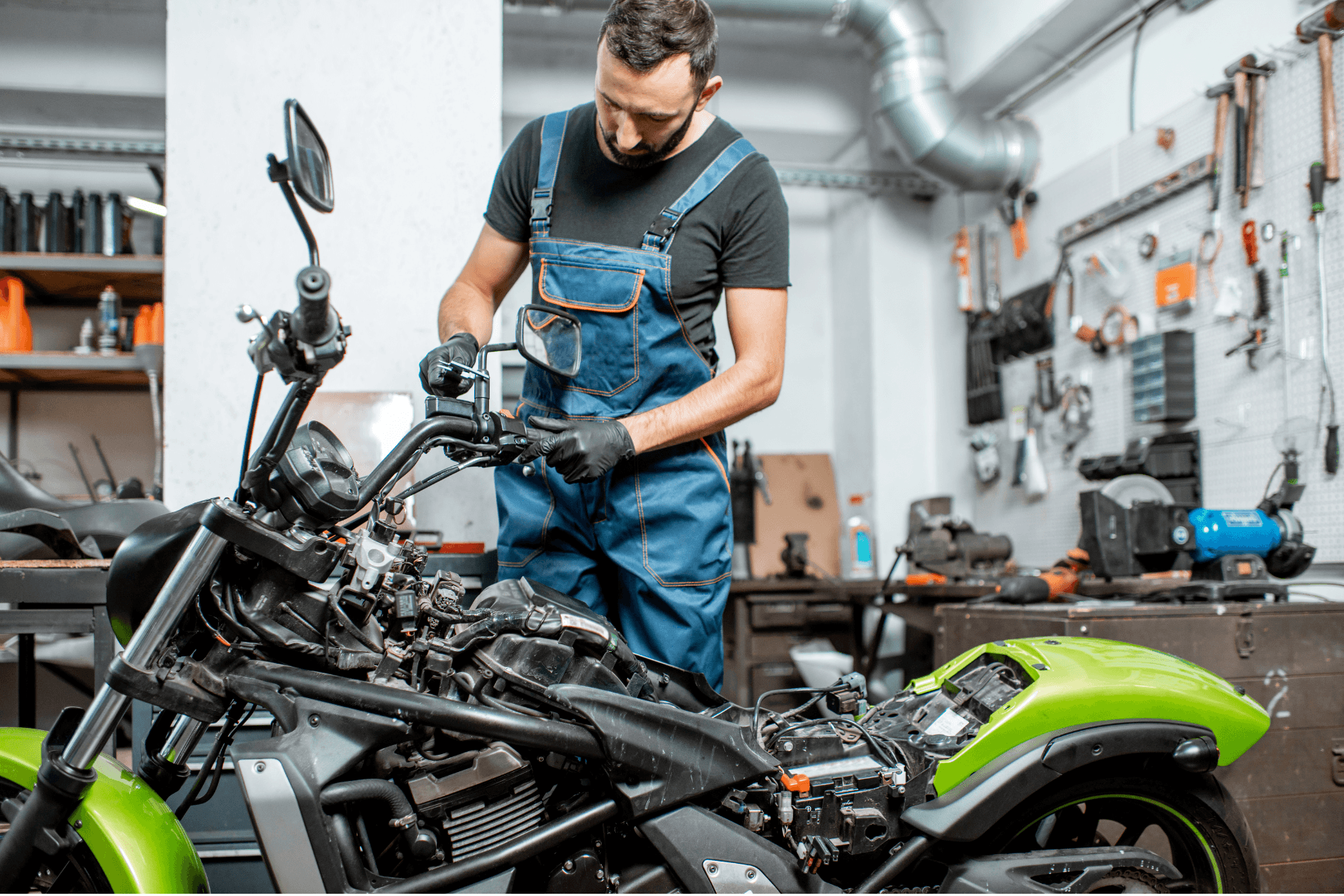
The AUR30820 Certificate III in Motorcycle Mechanical Technology provides learners with the technical knowledge and practical skills required to become a qualified motorcycle technician in the automotive industry.
This qualification focuses on diagnosing, servicing, and repairing a wide range of motorcycle systems, including engines, electrical systems, braking systems, steering, suspension, and driveline components. Learners gain hands-on experience working with modern tools, diagnostic equipment, and industry-standard repair techniques.
The course is designed for individuals seeking employment in motorcycle service and repair workshops, dealerships, and specialised automotive businesses. It also supports apprentices undertaking structured workplace-based training.
For Registered Training Organisations (RTOs), delivering this qualification enables the development of skilled tradespeople who meet current industry demands while staying audit-ready against safety, environmental, and quality standards.
Additionally, this qualification aligns with the Automotive Retail, Service and Repair Training Package and supports career progression into advanced automotive specialisations or supervisory roles.
The AUR30820 Certificate III in Motorcycle Mechanical Technology consists of 36 units of competency, including:
Elective units are selected from the list below, allowing learners to develop both essential technical competencies and specialised skills based on industry needs. Elective units must maintain the integrity of the qualification’s Australian Qualifications Framework (AQF) alignment, avoid duplicating the outcome of another selected unit, and contribute to a valid industry-supported vocational outcome.
The core units provide comprehensive training in motorcycle diagnostics, repair, servicing, and workplace safety practices.
| Unit Code | Unit Title | Unit Outcome / Summary |
|---|---|---|
| AURAEA002 | Follow environmental and sustainability best practice in an automotive workplace | Apply eco-friendly practices and minimise environmental impact in automotive tasks |
| AURASA102 | Follow safe working practices in an automotive workplace | Ensure workplace safety and adherence to WHS regulations |
| AURETR112 | Test and repair basic electrical circuits | Diagnose and repair fundamental electrical circuit faults |
| AURETR125 | Test, charge and replace batteries and jump-start vehicles | Maintain and service vehicle batteries safely |
| AURETR131 | Diagnose and repair ignition systems | Identify faults and repair ignition systems |
| AURJTB101 | Diagnose and repair motorcycle braking systems | Service and repair braking components for safe operation |
| AURJTD103 | Diagnose and repair motorcycle suspension systems | Maintain and repair suspension for stability and comfort |
| AURJTD104 | Diagnose and repair motorcycle steering systems | Diagnose steering issues and restore handling performance |
| AURJTE101 | Diagnose and repair motorcycle engines | Perform engine diagnostics and major repairs |
| AURJTE103 | Inspect and service motorcycle engines | Conduct routine servicing and inspections |
| AURJTE104 | Diagnose and repair motorcycle engine management systems | Troubleshoot electronic engine control systems |
| AURJTQ102 | Diagnose and repair motorcycle driveline systems | Repair power transmission components |
| AURJTR102 | Diagnose and repair motorcycle charging systems | Maintain and repair charging systems |
| AURJTR103 | Diagnose and repair motorcycle starting systems | Diagnose and fix starting system faults |
| AURJTR104 | Diagnose and repair motorcycle dynamic control systems | Service advanced control systems like traction control |
| AURJTX101 | Diagnose and repair motorcycle clutch systems | Repair and maintain clutch systems |
| AURJTX102 | Diagnose and repair motorcycle manual transmissions | Diagnose gearbox faults and perform repairs |
| AURTTA118 | Develop and carry out diagnostic test strategies | Plan and execute effective diagnostic procedures |
| AURTTB101 | Inspect and service braking systems | Perform routine brake servicing |
| AURTTC103 | Diagnose and repair cooling systems | Maintain engine cooling systems |
| AURTTF101 | Inspect and service petrol fuel systems | Service fuel systems for optimal performance |
| AURTTF106 | Diagnose and repair petrol carburettor systems | Repair carburettor-related faults |
| AURTTK102 | Use and maintain tools and equipment in an automotive workplace | Safely use and maintain tools and workshop equipment |
Elective units allow Registered Training Organisations (RTOs) to customise training to suit specific job roles, such as advanced diagnostics, welding, customer service, or light vehicle skills.
| Unit Code | Unit Title | Unit Outcome / Summary |
|---|---|---|
| AURACA101 | Respond to customer needs and enquiries in an automotive workplace | Provide customer service and handle enquiries professionally |
| AURAFA103 | Communicate effectively in an automotive workplace | Improve workplace communication skills |
| AURETR116 | Read and apply vehicle wiring schematics and drawings | Interpret wiring diagrams for diagnostics |
| AURETR122 | Diagnose and repair vehicle dynamic control systems | Service electronic stability systems |
| AURETR123 | Diagnose and repair spark ignition engine management systems | Troubleshoot advanced engine systems |
| AURETR129 | Diagnose and repair charging systems | Repair vehicle charging systems |
| AURETR130 | Diagnose and repair starting systems | Diagnose starter motor issues |
| AURETR132 | Diagnose and repair automotive electrical systems | Perform complex electrical repairs |
| AURJTJ001 | Remove, inspect and refit motorcycle wheel and tyre assemblies | Service motorcycle wheels and tyres |
| AURJTJ002 | Remove, inspect, repair and refit motorcycle tyres and tubes | Repair and maintain tyres |
| AURJTQ001 | Inspect and service motorcycle driveline systems | Perform driveline maintenance |
| AURJTX103 | Diagnose and repair motorcycle automatic transmissions | Service automatic transmission systems |
| AURLTD104 | Diagnose and repair light vehicle steering systems | Repair steering systems in light vehicles |
| AURLTD105 | Diagnose and repair light vehicle suspension systems | Maintain suspension systems |
| AURLTJ102 | Remove, inspect, repair and refit light vehicle tyres and tubes | Handle tyre servicing for light vehicles |
| AURLTQ101 | Diagnose and repair light vehicle final drive assemblies | Repair final drive components |
| AURLTQ102 | Diagnose and repair light vehicle drive shafts | Maintain drive shafts |
| AURLTZ101 | Diagnose and repair light vehicle emission control systems | Ensure adherence to emission standards |
| AURSCA106 | Promote automotive products and services | Develop sales and promotional skills |
| AURTTA009 | Carry out mechanical pre-repair operations | Prepare vehicles for repair work |
| AURTTA104 | Carry out servicing operations | Perform general servicing tasks |
| AURTTA105 | Select and use bearings, seals, gaskets, sealants and adhesives | Apply correct materials in repairs |
| AURTTC001 | Inspect and service cooling systems | Maintain cooling systems |
| AURTTE104 | Inspect and service engines | Conduct engine servicing |
| AURTTQ001 | Inspect and service final drive assemblies | Maintain drivetrain systems |
| AURTTQ103 | Inspect and service drive shafts | Service drive shaft components |
| AURTTZ102 | Diagnose and repair exhaust systems | Repair exhaust systems |
| AURVTW018 | Carry out oxyacetylene welding, thermal heating and cutting | Perform gas welding and cutting |
| AURVTW101 | Carry out manual metal arc welding on components | Apply arc welding techniques |
| AURVTW109 | Carry out basic gas metal arc welding | Perform MIG welding |
Note: Only 13 elective units are required to complete the qualification.
There are no formal entry requirements for the AUR30820 Certificate III in Motorcycle Mechanical Technology qualification.
However, RTOs should note the following:
After completing the AUR30820 Certificate III in Motorcycle Mechanical Technology, learners can progress to:
Career outcomes include:
The AUR30820 Certificate III in Motorcycle Mechanical Technology offers flexible delivery options that allow RTOs to structure training around apprenticeship arrangements, learner needs, and available workshop environments.
| Delivery Mode | Duration | Delivery Method |
|---|---|---|
| Classroom-Based Learning | 2–4 years (apprenticeship) | Face-to-face with practical workshops |
| Workplace-Based Learning | 2–4 years | On-the-job training with supervision |
| Blended Learning | Flexible | Combination of online theory and practical training |
The AUR30820 Certificate III in Motorcycle Mechanical Technology is developed in consultation with industry to ensure alignment with real workplace practices.
RTOs delivering this qualification must:
The AUR30820 Certificate III in Motorcycle Mechanical Technology is a strong addition to any RTO’s automotive scope. By offering this course, RTOs can:
This qualification equips learners with the expertise required to succeed in a dynamic and technically advanced automotive industry.
This qualification equips learners with the practical skills and technical knowledge required to inspect, service, diagnose, and repair a wide range of motorcycles. It prepares graduates for employment in the automotive service and repair industry as qualified motorcycle technicians.
Learners develop skills in motorcycle engine servicing, braking systems, steering, suspension, driveline systems, electrical circuits, charging and starting systems, engine management, workplace safety, diagnostic procedures, and the use of industry-standard tools and equipment.
No formal entry requirements apply to this qualification. However, individual training providers may have their own enrolment or apprenticeship requirements, so it is advisable to check with the chosen provider before applying.
Yes. AUR30820 is widely delivered through apprenticeship pathways, allowing learners to gain practical workplace experience while completing nationally recognised training in motorcycle mechanical technology.
Graduates can pursue careers such as Motorcycle Mechanic, Motorcycle Service Technician, Motorcycle Repair Technician, or Workshop Technician, working within motorcycle dealerships, service centres, and independent repair workshops.
Yes. The qualification includes training in diagnosing and repairing motorcycle electrical systems, including batteries, ignition systems, charging systems, starting systems, and the electronic engine management technologies commonly used in modern motorcycles.
To achieve the qualification, learners must successfully complete 36 units of competency, comprising 23 core units and 13 elective units selected according to the qualification packaging rules.
Yes. The qualification develops the skills needed to inspect, maintain, diagnose, and repair a broad variety of motorcycles used across the automotive service and repair industry, helping graduates adapt to different motorcycle types and systems.
Yes. Learners are trained to follow workplace health and safety procedures, identify hazards, manage workplace risks, and apply environmentally sustainable work practices throughout servicing and repair activities.
Yes. After completing AUR30820, graduates may expand their expertise through higher-level automotive qualifications, allowing them to specialise in advanced diagnostics, mechanical overhauling, or other areas of the automotive industry.
Contact RTO Resources Australia
For more information on delivering the AUR30820 Certificate III in Motorcycle Mechanical Technology, or to access audit-ready training and assessment resources for your RTO, please contact RTO Resources Australia.
If you run compliance, training and assessment, or delivery at an RTO, you already know the theory of
Assessment tool review is the ongoing, internal check that your tools work as intended. Validation is
When vocational currency is discussed in the VET sector, the conversation tends to focus heavily on industry
An LLND tool is a structured resource RTOs use to assess a learner’s Language, Literacy, Numeracy
For most Australian RTOs, SCORM remains the safer default: it’s the most widely supported e-learning
Contextualising purchased RTO resources means adapting off-the-shelf learning and assessment materials