preload-image

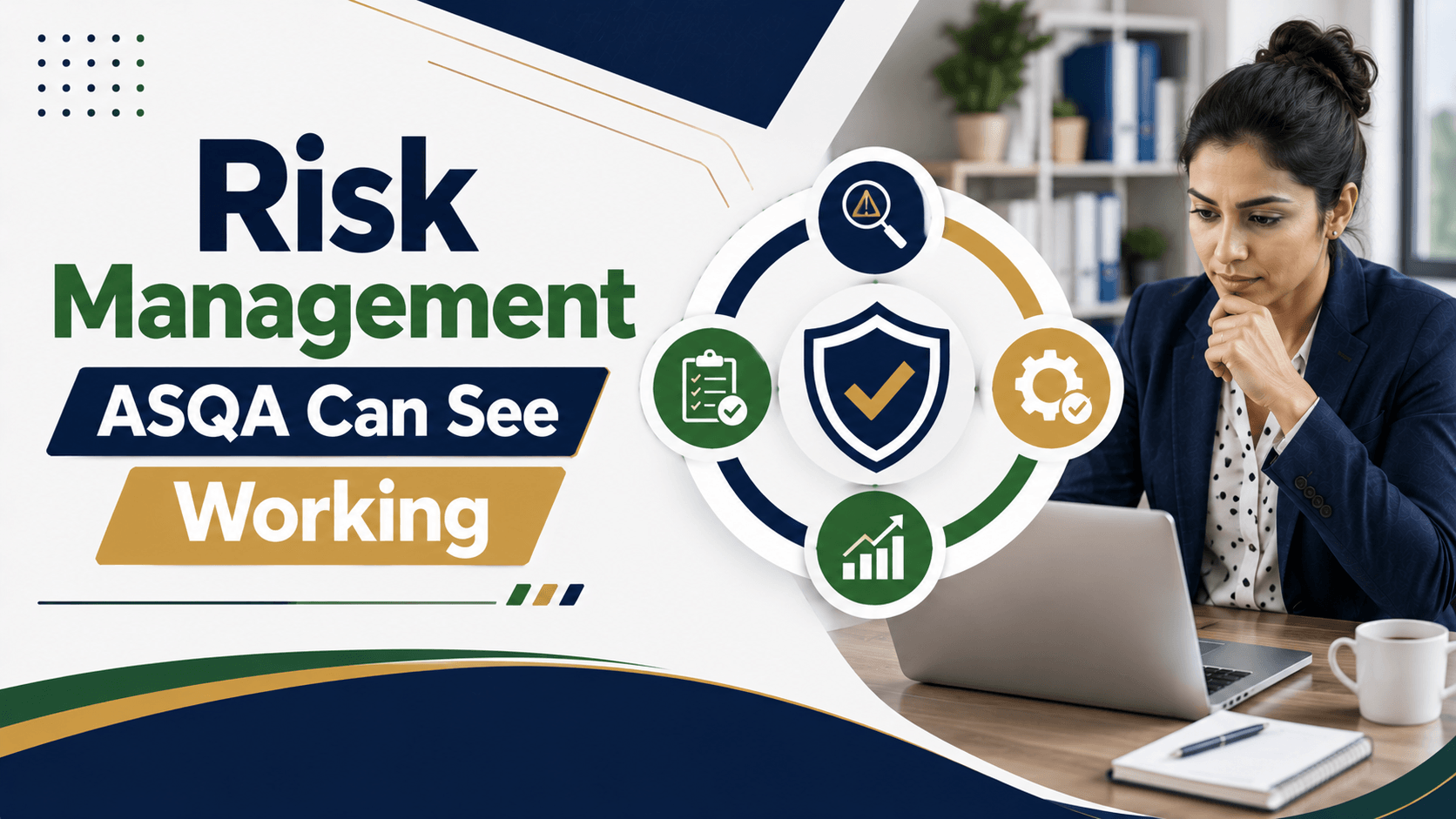
Risk Management ASQA Can See Working

Quality Area 4 · Governance

◆  Who owns this: CEO, Board & the Compliance Manager

The short version: Standard 4.2 expects an RTO to identify, assess and manage risks to quality and compliance — and to show the process actually operates. A risk register that exists but never moves is one of the easiest findings for an auditor to spot.

Risk management is where a lot of governance intentions go to die. The register gets built for a previous audit, then sits untouched. The 2025 Standards expect something living — a process that genuinely shapes decisions.

What Standard 4.2 expects

The expectation is a functioning approach to identifying, assessing and treating risks to the quality of training and to compliance — integrated into how the RTO is governed and run. It connects directly to self-assurance: you cannot assure yourself if you are not actively managing the things most likely to go wrong.

Where RTOs get exposed

Most RTOs can produce a governance policy. Very few can produce evidence that governance is operating. That gap is exactly where the exposure sits. A policy says what should happen. ASQA’s self-assurance lens asks what did happen, how often, and what changed as a result.

Two failure patterns are especially common:

  • The frozen register.A risk register that has not changed in a year signals a process that is not operating.
  • Risks with no treatment Risks listed but no actions, owners or review dates.
  • No governance link.A Risk management that the board never actually engages with.
  • Generic risks only. A copied list that does not reflect this RTO’s real exposures.
The tell auditors look for.Dates. A risk register with no recent updates, no review dates and no closed items tells an auditor the process is decorative. A living register with movement tells the opposite story.

What good practice looks like vs what fails

✓ Holds up

A live risk register reviewed on a regular cadence
Risks rated, with treatments, owners and dates
Board engagement with risk every meeting
Risks specific to this RTO’s real operations

× Gets flagged

A register that never changes
Risks with no treatment or owner
Risk management the board never sees
A generic, copied risk list

How to close the gap

  1. Make the register live. Review it on a set cadence; add new risks, close treated ones, re-rate the rest.
  2. Treat every risk Each risk gets an action, an owner and a review date.
  3. Put it in front of the board. Risk is a standing governance item, not an annual artefact.
  4. Make it specific Reflect your real operations — scope, delivery modes, third parties, workforce — not a template.

Is your risk process actually operating?

The free Risk Scorecard scores Governance exposure — including whether your risk management would read as live to an auditor.

Frequently asked questions

It expects an RTO to identify, assess and treat risks to training quality and compliance, integrated into governance and operating in practice — not just documented. It connects closely to the self-assurance expectations in Quality Area 4

Movement and dates: regular reviews, new risks added, treated risks closed, ratings updated, and clear owners and review dates. A register that never changes signals a process that is not actually operating.

Yes. Risk management should be integrated into governance, with the board engaging regularly. Risk that leadership never sees is difficult to evidence as a functioning part of the RTO’s oversight.

Risk management and self-assurance are linked: actively managing your most likely failure points is part of assuring yourself that your systems work. Risk data should feed your monitoring and improvement loop.

Leave a comment

Related posts

Product was successfully added to your cart!
Enquire Now
×

    Enquire Now