RTO New Registration Process: Step-by-Step Guide for New Providers
- May 25, 2026
- 14
Introduction
Starting a registered training organisation is not just about lodging an application and waiting for approval. The RTO new registration process in Australia requires planning, evidence, systems, resources, and a clear understanding of what ASQA expects from a quality provider from day one. ASQA’s current guidance makes it clear that applicants must show both capability to deliver quality VET and readiness to comply with the regulatory framework from the date registration is granted.
This matters even more now because the 2025 Standards for RTOs came into effect on 1 July 2025, alongside the Compliance Requirements and Credential Policy. That means new applicants need to prepare for current regulatory expectations, not outdated assumptions based on older RTO setups.
Some applicants think RTO registration is mainly an administrative exercise. It is not. The process involves business planning, choosing your proposed scope carefully, preparing policies and systems, completing declarations, demonstrating financial viability, and submitting supporting evidence in the correct form. ASQA also states that newly registered RTOs cannot apply to add training products to their scope until they have been registered for 24 months or more, so your initial planning matters a lot.
In this blog, we break down what RTO registration means, when to start preparing, the 8 key steps in the RTO new registration process, the common mistakes applicants make, and the checklist that helps you prepare more strategically.
What Does RTO Registration Mean?
RTO registration means becoming a Registered Training Organisation approved to deliver nationally recognised vocational education and training within Australia’s VET system. Training.gov.au is the national training register and records nationally recognised training products as well as the RTOs approved to deliver them.
For a new provider, registration is the formal process of applying to the regulator and demonstrating that the organisation is capable of operating as a quality VET provider. ASQA’s guidance explains that applicants must understand the registration requirements, prepare evidence, build policies and systems, secure resources, and show readiness to comply with the relevant regulatory and legislative obligations.
This is why RTO registration should not be seen as simply “getting approved.” It means proving that your organisation has the governance, people, financial footing, resources, systems, and educational integrity needed to deliver quality outcomes for learners and industry. ASQA’s assessment approach is risk-based and focuses on whether the organisation will be fully compliant from the date of registration and able to maintain that compliance over time.
When Should an RTO Start Preparing for Registration?
A new provider should start preparing well before opening the application form. ASQA’s own preparation guidance shows that before submission, applicants are expected to understand the requirements, undertake business planning, choose training products, develop policies and systems, gain access to required resources, prepare the application form, and prepare supporting evidence.
That tells you something important: the RTO new registration process starts long before lodgement.
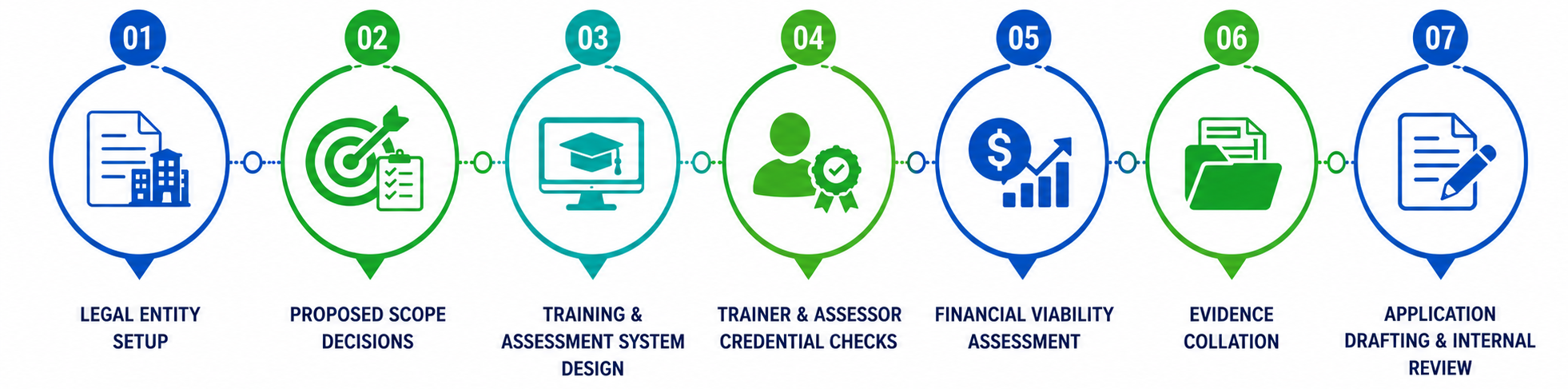
A realistic preparation period is needed because applicants must usually work through:
- legal entity setup
- proposed scope decisions
- training and assessment system design
- trainer and assessor credential checks
- financial viability assessment
- evidence collation
- application drafting and internal review
It is also important to start early because your initial scope needs to include all training products you intend to deliver in your first 24 months of operation. ASQA states that new RTOs are not permitted to add training products to the approved scope until they have successfully delivered their first 24 months of approved scope. That makes early scope planning a strategic decision, not a minor formality.
In short, the best time to begin preparing for RTO registration is before you think you are ready to apply.
Step 1: Understand the Current RTO Registration Requirements
The first step is not filling in the form. The first step is understanding the framework you are applying to.
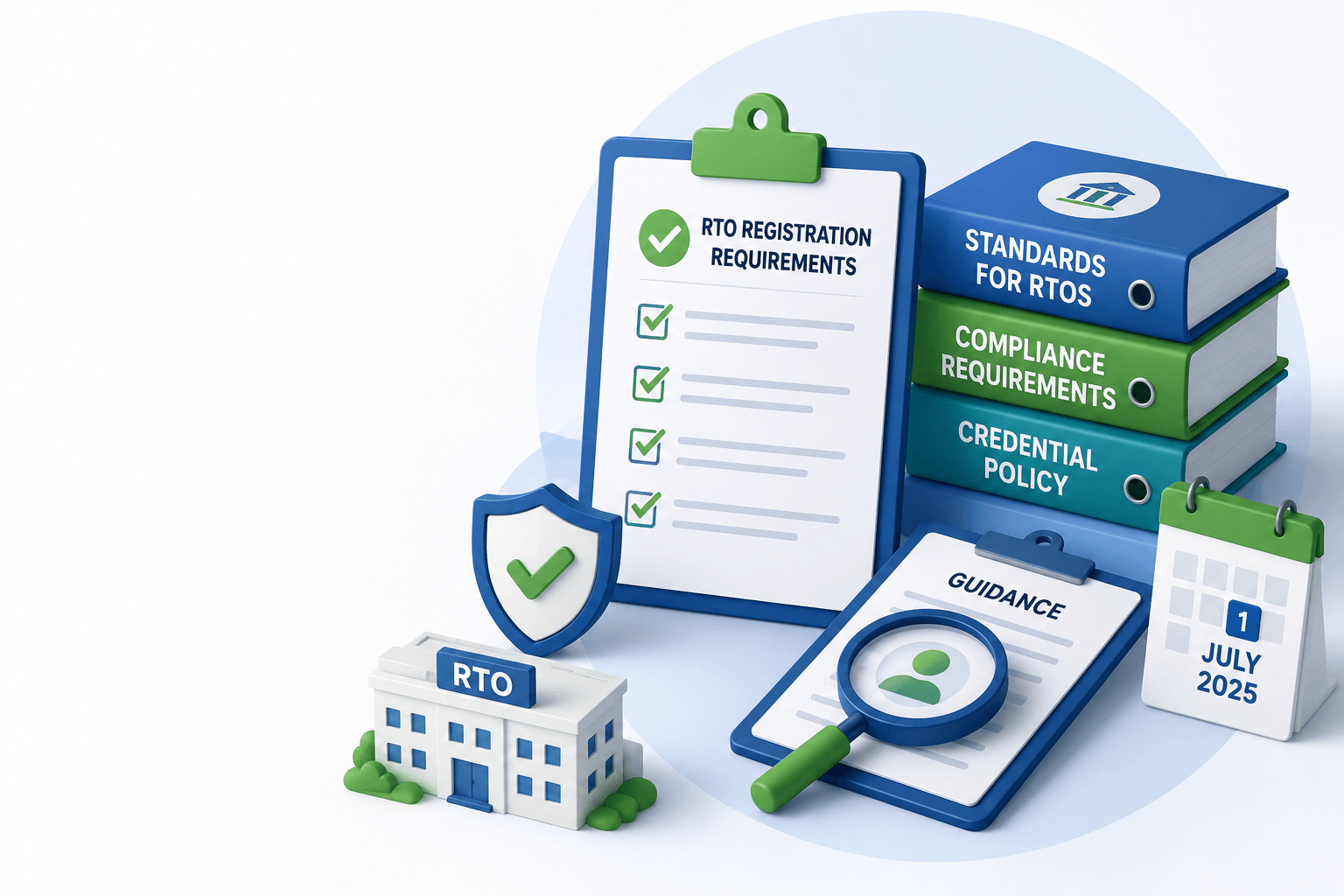
Since 1 July 2025, the revised framework has been in effect through the 2025 Standards for RTOs, the Compliance Requirements, and the Credential Policy. These instruments shape what regulators expect from providers and what providers must be able to demonstrate.
This step matters because many applicants still approach RTO registration using outdated assumptions. But ASQA’s current materials make it clear that applicants need to understand:
- Provider responsibilities and obligations
- registration requirements
- resourcing requirements
- required supporting evidence
- How ASQA assesses initial applications
A strong registration process begins with reading the regulator’s current guidance carefully and aligning your model to today’s requirements, not older sector habits.
Step 2: Set Up the Legal Entity and Business Foundations
The next step is establishing the business foundation of the organisation.
ASQA requires applicants to provide registration details, including:
- legal entity details such as ABN/ACN
- evidence of the legal entity
- head office or principal place of business
- ownership details
- people associated with the organisation
- CEO details
- contact details
- delivery sites
- proposed scope items
- any scope-specific evidence
This step is where many weak applications begin to show cracks. A new provider must not only exist legally but also have a structure that makes sense operationally. If the organisation’s ownership, governance, delivery model, sites, or management arrangements are unclear, that weakness usually flows through the rest of the application.
This is also where business planning becomes critical. ASQA’s guide states that applicants must show the foundations of a sustainable business and be independently assessed as financially viable at the time the initial registration application is submitted.
So this step is not just “company setup.” It is the point where your organisation starts proving it is a real and sustainable provider, not just a concept.
Step 3: Choose Your Proposed Scope Carefully
One of the most strategic parts of the RTO’s new registration process is selecting your initial scope of registration.
ASQA states that when submitting an application, the organisation should include the full scope of training package qualifications, accredited courses and units of competency it seeks to deliver within its first 24 months of operation. It also states that newly registered RTOs are not permitted to add training products to the approved scope until they have been registered for 24 months or more.
That means scope selection should not be rushed.
A strong proposed scope should be based on:
- genuine business capability
- trainer and assessor capacity
- access to facilities, equipment and resources
- learner and industry demand
- delivery and assessment feasibility
- compliance readiness for each training product
This is where many new providers go wrong. They choose a broad scope because it looks attractive commercially. But a wide scope that you cannot support with real systems and evidence can weaken the whole application.
The smarter approach is to choose a scope that is credible, supportable, and aligned with your first two years of operation.
Step 4: Build Policies, Systems, Tools and Resources
ASQA’s preparation page states that applicants need to develop their organisation’s policies, procedures, systems and tools so they are ready to become a quality training provider, and they need to gain access to all required resources.
This is one of the biggest practical steps in RTO registration because the regulator is not looking for vague intentions. It is looking for evidence that the organisation is actually ready to operate.
That means preparing systems and resources for areas such as:
- enrolment and pre-enrolment information
- learner support
- training and assessment practices
- assessment validation
- trainer and assessor engagement
- recordkeeping
- complaints and appeals
- governance and quality assurance
- issuance and certification processes
- continuous improvement
Under the current framework, trainer and assessor credentialling is also important. The Credential Policy states that all people delivering training and/or assessment must hold specified credentials or be working toward appropriate credentials under direction, depending on the role they perform.
In other words, this step is where your organisation starts looking like a functioning provider rather than a registration applicant.
Step 5: Prepare the Evidence for Fit and Proper Person and Financial Viability Requirements
Every serious RTO new registration process requires close attention to mandatory declarations and financial evidence.
ASQA states that all applications must be accompanied by:
- a completed initial RTO application form
- a signed CEO statutory declaration
- fit and proper person declaration forms for the CEO, executive officers, high managerial agents, and any person who exercises a degree of control or influence over the management or direction of the organisation
- a financial viability risk assessment
- comprehensive supporting evidence showing commitment and capability to become a quality provider
ASQA’s guide further explains that, at the time the application is submitted, the organisation must have been independently assessed as a financially viable business entity. The nominated accountant must be independent and appropriately qualified, and the financial viability materials require forecast information for the next 12 and 24 months.
The fit and proper person requirement also remains central. ASQA’s practice guide confirms that these requirements apply to a person applying to become an NVR registered training organisation and to governing persons involved in that organisation.
This step matters because a polished application cannot compensate for weak or incomplete mandatory evidence.
Step 6: Complete and Lodge the Initial RTO Registration Application
Once the organisation is genuinely prepared, the next step is to lodge the application through ASQANET.
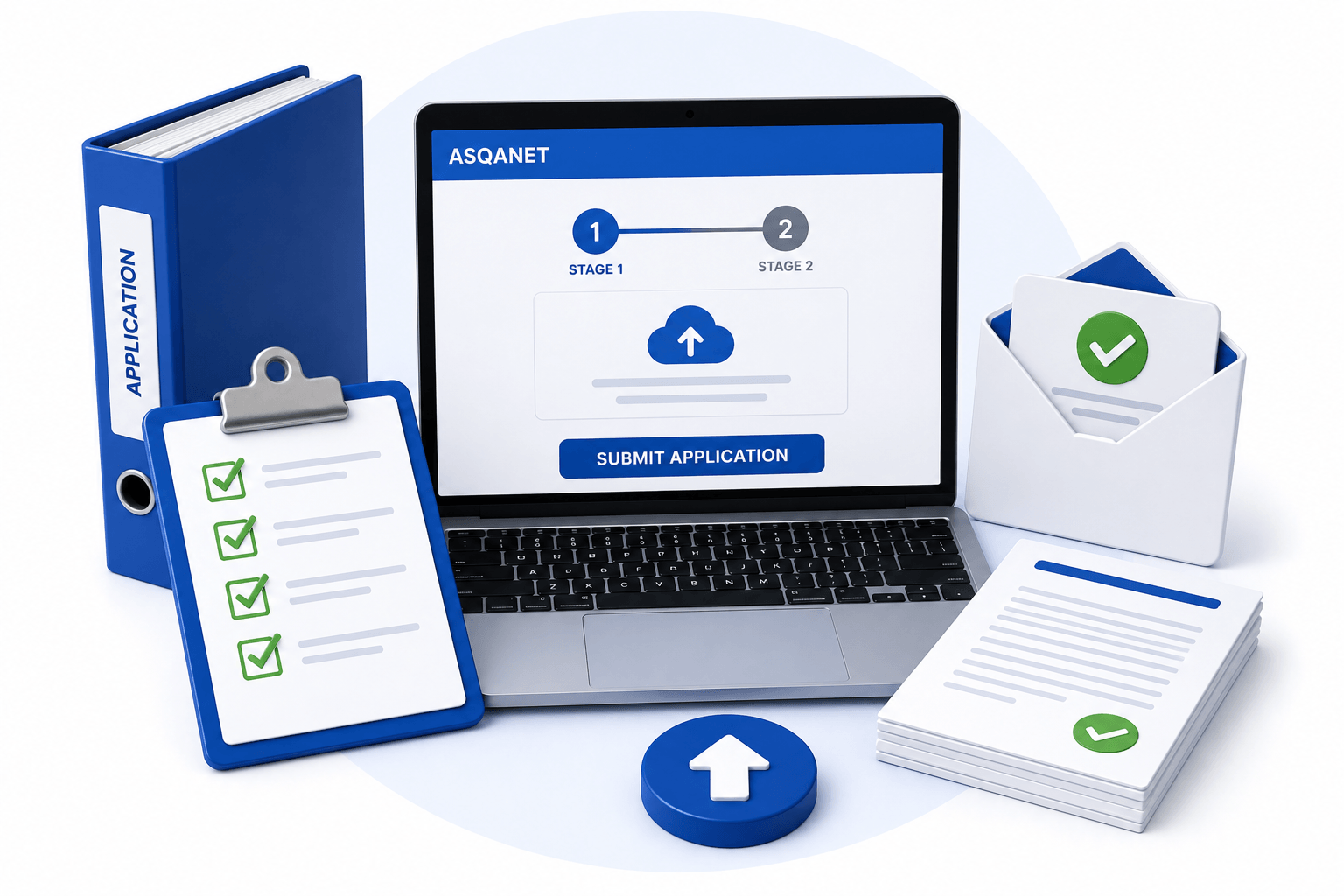
ASQA states that initial RTO registration applications are submitted in 2 stages. In Stage 1, the applicant prepares and submits the application through the asqanet portal, including registration details, declarations, the financial viability risk assessment tool and supporting documentation, and the completed application form.
After submission, ASQA issues a lodgement fee invoice, and it will not begin reviewing the application until the lodgement fee has been received. Once the application has been submitted and the lodgement fee paid, ASQA sends an email with a unique link so the applicant can upload supporting evidence files.
This part of the process sounds administrative, but it is a quality checkpoint. ASQA warns that if required information or documents are not provided, the application will be considered incomplete and will not be assessed. It also states that applicants will not be permitted to resubmit the application form, so responses need to be complete, truthful, and accurate.
That is why the smartest applicants review the full submission package carefully before they lodge anything.
Step 7: Prepare for ASQA’s Assessment Process
After lodgement, the next phase is the regulator’s assessment.
ASQA says it uses a rigorous risk-based assessment methodology for initial applications. It assesses whether the organisation is prepared to be fully compliant with the VET Quality Framework from the date of registration and whether it has the commitment and capability to maintain compliance over time. ASQA also notes that applications are not always processed in order of receipt.
This step is important because applicants should not assume that a submitted application will “speak for itself.” The evidence package, the internal systems, the resourcing model, and the readiness of key personnel all matter.
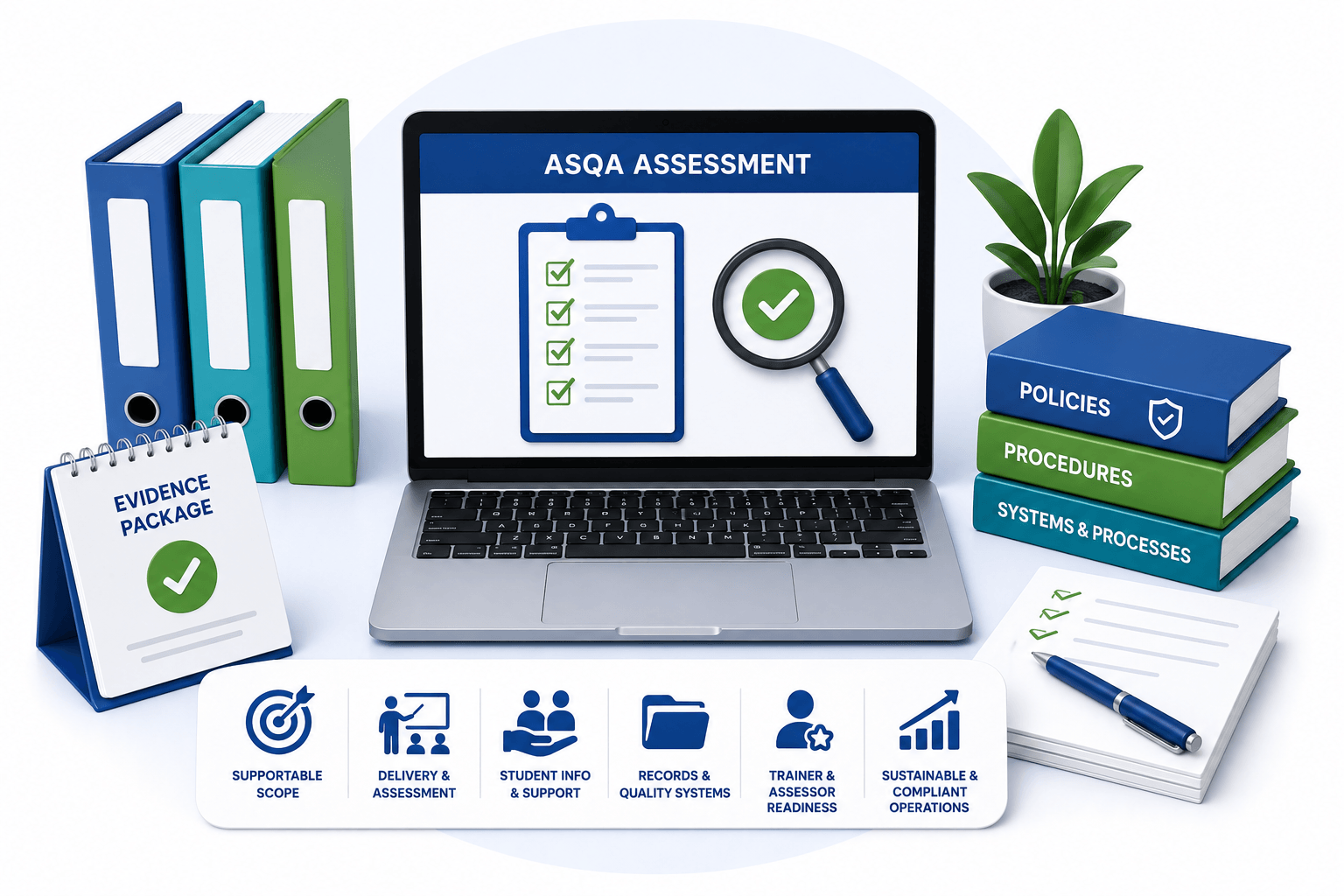
At this point, a provider should be ready to demonstrate:
- Why the chosen scope is supportable
- How training and assessment will be delivered
- How students will be informed and supported
- How records and quality systems will be managed
- How trainers and assessors meet current expectations
- How the organisation will operate sustainably and compliantly
The strongest new providers do not just prepare documents. They prepare the organisation itself.
Step 8: Respond Quickly and Accurately to Any Issues Raised
The final step in the RTO registration journey is how you manage regulator feedback, requests, or identified gaps.
ASQA’s registration decision guidance states that an application may be rejected if:
- information or evidence provided is false or misleading
- The requested information or evidence is not provided in the specified time or form
- The application does not demonstrate that the organisation will be fully compliant from the date of registration
- The organisation has not demonstrated commitment and capability to deliver quality education and training
- Key people are not fit and proper
- The organisation has not demonstrated financial viability to the satisfaction of the regulator
That means post-submission responsiveness is not a minor issue. It is part of the outcome.
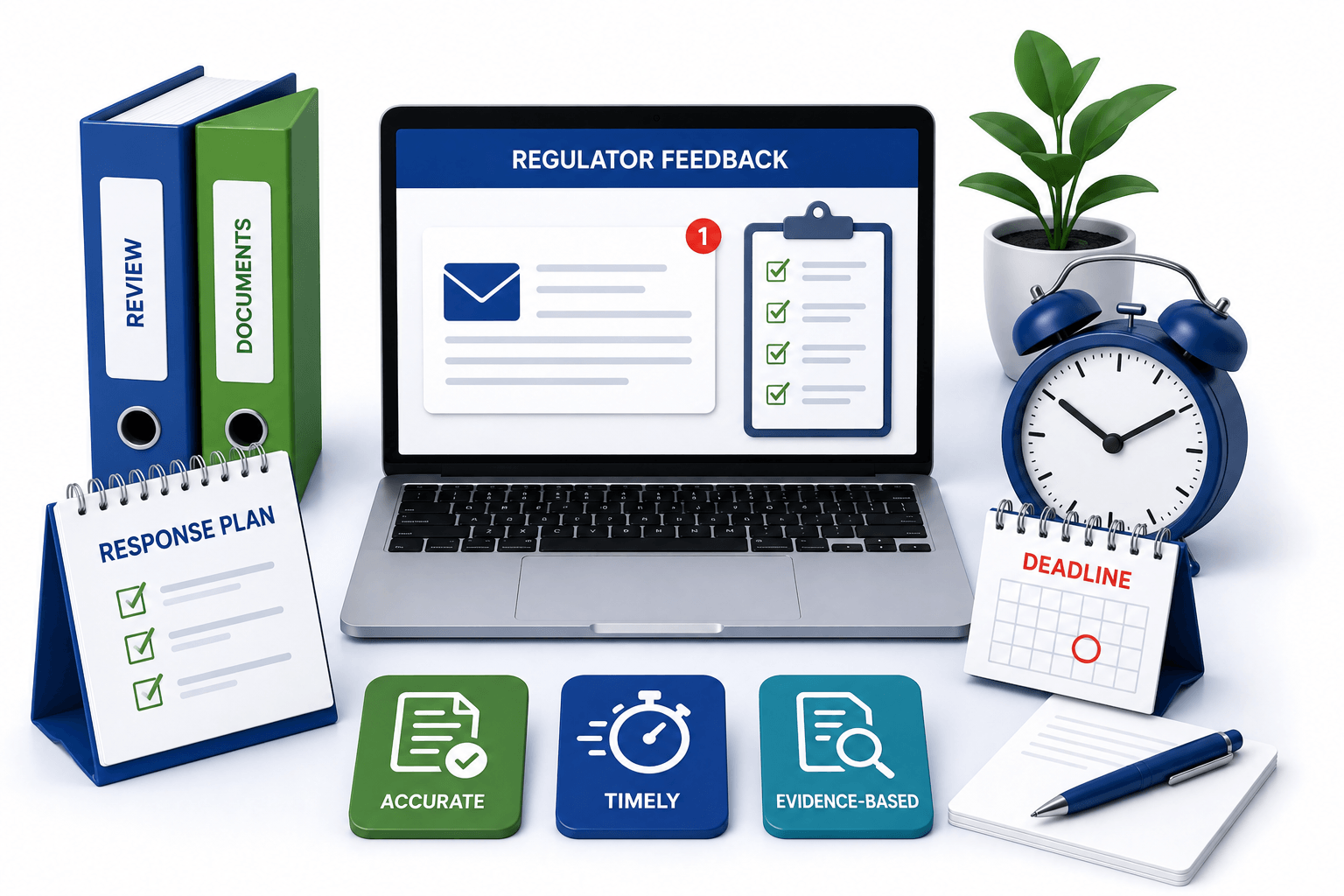
A well-prepared provider treats every response to ASQA as formal, evidence-based, timely, and precise. If there is a gap, it should be addressed properly, not explained away casually.
Common Mistakes New Applicants Make During RTO Registration
Many applicants do not fail because they are unaware of the broad goal. They struggle because they underestimate what the RTO’s new registration process actually demands.
Here are some of the most common mistakes:
Starting with the form instead of the framework
Some applicants begin by filling in the application before they have properly understood the current Standards, Compliance Requirements, and Credential Policy. That usually leads to weak answers and poor evidence alignment.

Choosing too much scope too early
Because newly registered RTOs cannot add training products for the first 24 months, some applicants try to solve that by applying for an overly broad scope. But if the scope is wider than the organisation’s actual capacity, it creates risk.

Treating policies as paperwork only
Policies and procedures are not just files for submission. They need to reflect systems that can actually operate in practice. ASQA’s preparation guidance clearly expects applicants to develop the policies, systems, tools and resources needed to become a quality provider.

Weak financial preparation
Financial viability is not optional. ASQA requires independent assessment and forecast information, including the next 12 and 24 months. A weak business case here can damage the whole application.

Incomplete or inaccurate submission
ASQA states that incomplete applications will not be assessed and that false or misleading information can lead to rejection.

Using outdated compliance assumptions
The current registration environment is shaped by the framework that took effect on 1 July 2025. Applicants relying on older models risk preparing for the wrong benchmark.

RTO New Registration Checklist
Before you submit your application, check whether the following are genuinely in place:
Business and legal setup
- legal entity established
- ABN or ACN confirmed
- Ownership and governance details documented
- CEO and key people identified
- delivery sites confirmed where relevant
Registration planning
- Current regulatory requirements reviewed
- The proposed scope has been selected for the first 24 months
- scope matched to operational capability
- Business model and delivery model clarified
Systems and resources
- policies and procedures prepared
- learner information systems ready
- training and assessment systems ready
- complaints and appeals processes ready
- recordkeeping systems prepared
- required facilities, equipment and resources secured
People and credentials
- trainer and assessor arrangements documented
- credentials checked against current requirements
- relevant governance and management roles documented
Evidence and declarations
- The initial RTO application form was completed
- The CEO’s statutory declaration is ready
- fit and proper person declarations ready
- Financial viability risk assessment completed
- supporting evidence collated and quality-checked
Submission readiness
- ASQANET account ready
- lodgement fee planning in place
- Responses reviewed for completeness and accuracy
- evidence files checked before upload
Final Thoughts
The RTO’s new registration process is not a simple registration task. It is a full readiness exercise.
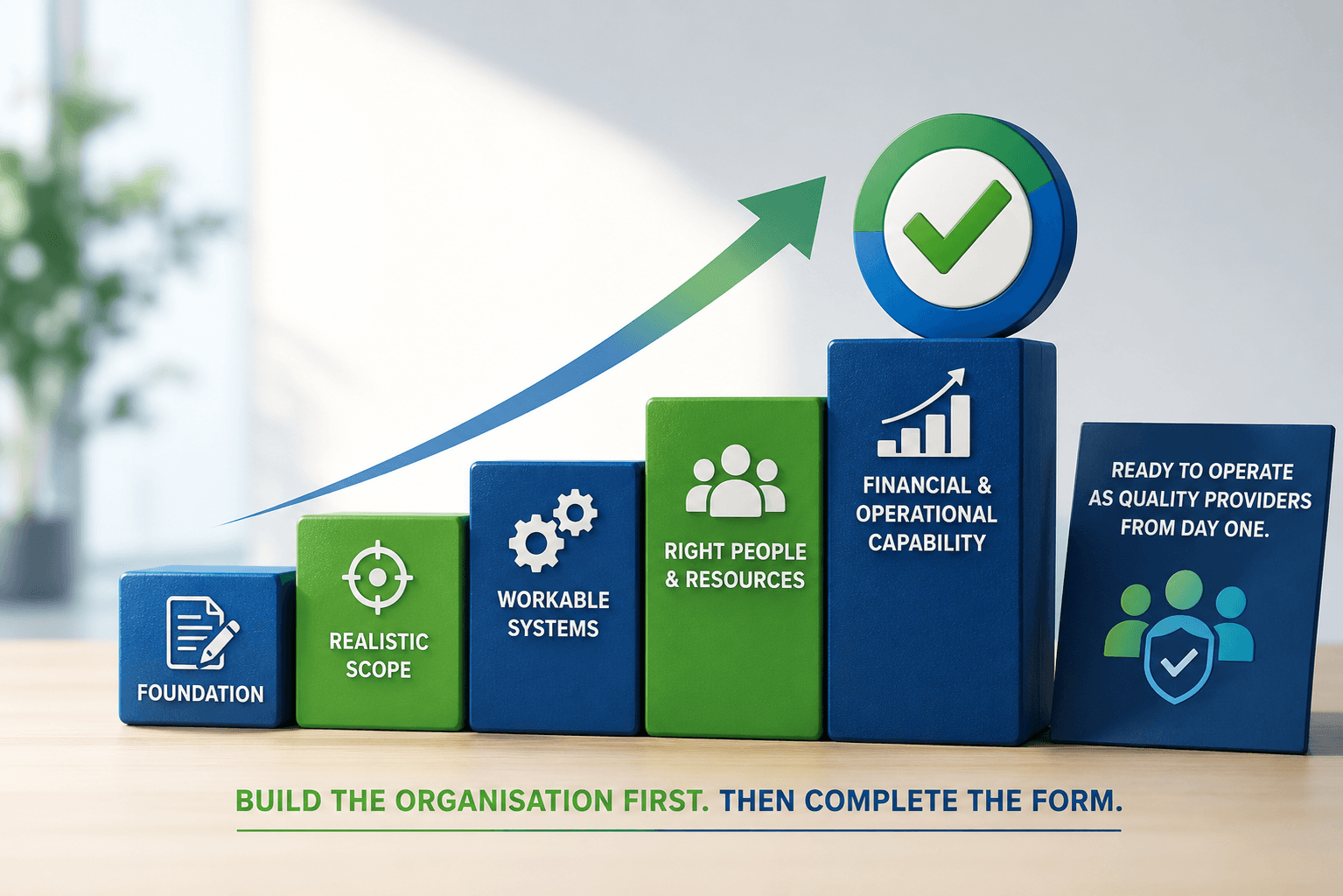
A strong RTO registration application shows more than intent. It shows that the organisation understands the current regulatory environment, has chosen a realistic scope, has built workable systems, has secured the right people and resources, and can demonstrate financial and operational capability from the beginning. ASQA’s current process makes it very clear that new providers must be ready to operate as quality providers from the date registration is granted, not learn the basics after approval.
That is why the best new applicants do not rush the form. They build the organisation first.
If your goal is to enter the VET sector properly, the smartest approach is to treat RTO registration as a strategic setup process, not just a compliance filing exercise. The better your preparation, the stronger your application and the lower your risk of delays, gaps, or rejection.
FAQs
What is RTO registration?
RTO registration is the process of becoming a Registered Training Organisation approved to deliver nationally recognised VET in Australia. Training.gov.au records nationally recognised training products and the RTOs approved to deliver them.
What is the RTO’s new registration process?
The RTO new registration process involves preparing your organisation for compliance, choosing your scope, developing systems and resources, completing declarations, demonstrating financial viability, lodging the application through asqanet, and providing supporting evidence to ASQA.
When should a new provider start preparing for RTO registration?
A provider should start before application lodgement because ASQA expects applicants to understand the requirements, undertake business planning, prepare systems and tools, secure resources, and prepare supporting evidence before submission.
Can a newly registered RTO add courses immediately after registration?
No. ASQA states that newly registered RTOs are not permitted to apply to add training products to approved scope until they have been registered for 24 months or more.
What documents are required for initial RTO registration?
ASQA requires a completed application form, CEO statutory declaration, fit and proper person declarations, financial viability risk assessment, and supporting evidence demonstrating commitment and capability to become a quality provider.
Do the 2025 Standards matter for new RTO applicants?
Yes. The 2025 Standards for RTOs came into effect on 1 July 2025, alongside the Compliance Requirements and Credential Policy, and they shape current regulatory expectations for providers.
Leave a comment